

ADVERTISEMENT

Here's how to make your own charcuterie board with Filipino flavors

Create one delicious feast with these basic components

Published Dec 31, 2021 09:37 am


It is inevitable to have a busy home kitchen during the holidays. Sure, people can always order food online but tradition is tradition. Holidays are meant to bring out the best of family recipes. It is like the Superbowl for home cooks. And while many already got a lot on their plate when it comes to kitchen duties, one particular dining experience doesn’t include stoves or pans and guarantees something great and tasty without any fuss and that’s the charcuterie board. (Say it with us, “shahr-kyu-tuh-ree”)
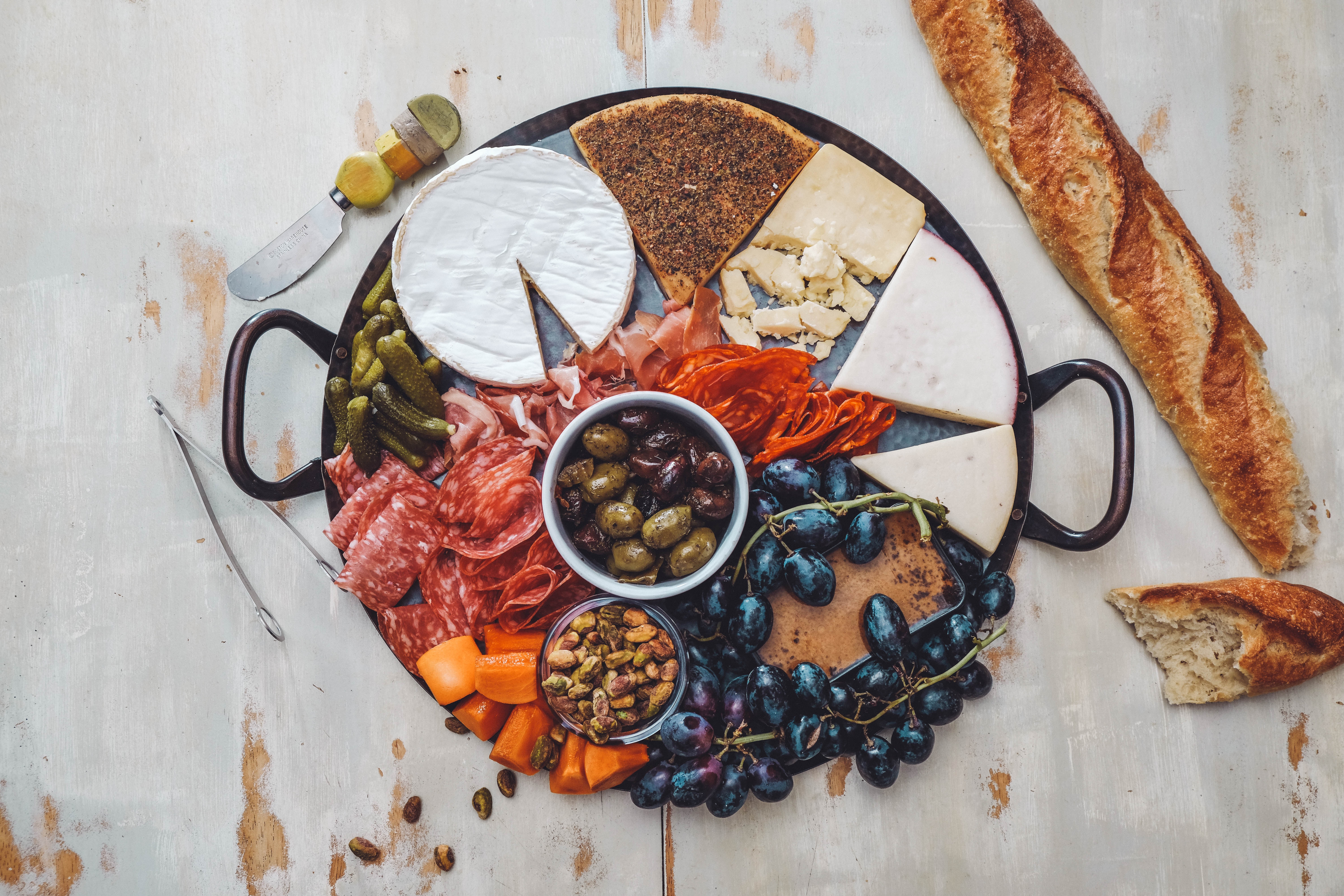
 

erik-dungan-MQyCrJVFG8U-unsplash.jpg
(Photo by Erik Dungan/Unsplash)


More than just a pile of meat and cheese thrown together, there is an art in making this small-sized grazing table. It offers flavorful treats for guests to nibble on while socializing, allows people to discover good food pairing, and did we mention there is no cooking involved?


If you’ve been thinking about creating your own charcuterie board this holiday season, here are some of the basics you need to take note of:


The components


According to Food & Wine, there are components that make a charcuterie board. There’s the cured meat to bring something savory and salty to the palate. You can choose from cold cuts like prosciutto, salami, pepperoni, chorizo, or something even grander like Jamon Iberico.


Next are the cheeses. As Bon Appétit food director Carla Lalli Music said, “Think of cheeses kind of like people.” There’s should be a variety that will suit everyone’s taste and a right mix is a must. For a hard and firm texture, parmesan, cheddar, gruyere, and manchego are the go-to. Fontina, muenster, and gouda are the semi-soft kinds. Pick soft cheeses like burrata, mascarpone, brie for something creamy. While blue-veined ones like gorgonzola and marbled blue jack add a unique element to the board.


This humble spread can be finished with sweets like honey, jams, and dried apricots and figs. Also welcome are fruits like grapes and strawberries. Other textural elements are nuts and biscuits. Think of pistachios, walnuts, and cashews, and crackers, pretzels, even bread.


Explore local


Add a Filipino twist to your charcuterie board with a few local treats. Dried mango can blend well with the other dehydrated fruits mentioned above. Baguio’s peanut brittle combines crunch and sweetness in one bite. Kesong puti would be a lovely addition to your cheese spread. And Davao’s tablea tsokolate and ube halaya made from the harvest of Pampanga’s farmers will definitely amplify local taste.


Happy nibbling!


Related Tags

food charcuterie board
ADVERTISEMENT
.most-popular .layout-ratio{ padding-bottom: 79.13%; } @media (min-width: 768px) and (max-width: 1024px) { .widget-title { font-size: 15px !important; } }

{{ articles_filter_1561_widget.title }}

.most-popular .layout-ratio{ padding-bottom: 79.13%; } @media (min-width: 768px) and (max-width: 1024px) { .widget-title { font-size: 15px !important; } }

{{ articles_filter_1562_widget.title }}

.most-popular .layout-ratio{ padding-bottom: 79.13%; } @media (min-width: 768px) and (max-width: 1024px) { .widget-title { font-size: 15px !important; } }

{{ articles_filter_1563_widget.title }}

{{ articles_filter_1564_widget.title }}

.mb-article-details { position: relative; } .mb-article-details .article-body-preview, .mb-article-details .article-body-summary{ font-size: 17px; line-height: 30px; font-family: "Libre Caslon Text", serif; color: #000; } .mb-article-details .article-body-preview iframe , .mb-article-details .article-body-summary iframe{ width: 100%; margin: auto; } .read-more-background { background: linear-gradient(180deg, color(display-p3 1.000 1.000 1.000 / 0) 13.75%, color(display-p3 1.000 1.000 1.000 / 0.8) 30.79%, color(display-p3 1.000 1.000 1.000) 72.5%); position: absolute; height: 200px; width: 100%; bottom: 0; display: flex; justify-content: center; align-items: center; padding: 0; } .read-more-background a{ color: #000; } .read-more-btn { padding: 17px 45px; font-family: Inter; font-weight: 700; font-size: 18px; line-height: 16px; text-align: center; vertical-align: middle; border: 1px solid black; background-color: white; } .hidden { display: none; }
function initializeAllSwipers() { // Get all hidden inputs with cms_article_id document.querySelectorAll('[id^="cms_article_id_"]').forEach(function (input) { const cmsArticleId = input.value; const articleSelector = '#article-' + cmsArticleId + ' .body_images'; const swiperElement = document.querySelector(articleSelector); if (swiperElement && !swiperElement.classList.contains('swiper-initialized')) { new Swiper(articleSelector, { loop: true, pagination: false, navigation: { nextEl: '#article-' + cmsArticleId + ' .swiper-button-next', prevEl: '#article-' + cmsArticleId + ' .swiper-button-prev', }, }); } }); } setTimeout(initializeAllSwipers, 3000); const intersectionObserver = new IntersectionObserver( (entries) => { entries.forEach((entry) => { if (entry.isIntersecting) { const newUrl = entry.target.getAttribute("data-url"); if (newUrl) { history.pushState(null, null, newUrl); let article = entry.target; // Extract metadata const author = article.querySelector('.author-section').textContent.replace('By', '').trim(); const section = article.querySelector('.section-info ').textContent.replace(' ', ' '); const title = article.querySelector('.article-title h1').textContent; // Parse URL for Chartbeat path format const parsedUrl = new URL(newUrl, window.location.origin); const cleanUrl = parsedUrl.host + parsedUrl.pathname; // Update Chartbeat configuration if (typeof window._sf_async_config !== 'undefined') { window._sf_async_config.path = cleanUrl; window._sf_async_config.sections = section; window._sf_async_config.authors = author; } // Track virtual page view with Chartbeat if (typeof pSUPERFLY !== 'undefined' && typeof pSUPERFLY.virtualPage === 'function') { try { pSUPERFLY.virtualPage({ path: cleanUrl, title: title, sections: section, authors: author }); } catch (error) { console.error('ping error', error); } } // Optional: Update document title if (title && title !== document.title) { document.title = title; } } } }); }, { threshold: 0.1 } ); function showArticleBody(button) { const article = button.closest("article"); const summary = article.querySelector(".article-body-summary"); const body = article.querySelector(".article-body-preview"); const readMoreSection = article.querySelector(".read-more-background"); // Hide summary and read-more section summary.style.display = "none"; readMoreSection.style.display = "none"; // Show the full article body body.classList.remove("hidden"); } document.addEventListener("DOMContentLoaded", () => { let loadCount = 0; // Track how many times articles are loaded const offset = [1, 2, 3, 4, 5, 6, 7, 8, 9, 10]; // Offset values const currentUrl = window.location.pathname.substring(1); let isLoading = false; // Prevent multiple calls if (!currentUrl) { console.log("Current URL is invalid."); return; } const sentinel = document.getElementById("load-more-sentinel"); if (!sentinel) { console.log("Sentinel element not found."); return; } function isSentinelVisible() { const rect = sentinel.getBoundingClientRect(); return ( rect.top < window.innerHeight && rect.bottom >= 0 ); } function onScroll() { if (isLoading) return; if (isSentinelVisible()) { if (loadCount >= offset.length) { console.log("Maximum load attempts reached."); window.removeEventListener("scroll", onScroll); return; } isLoading = true; const currentOffset = offset[loadCount]; window.loadMoreItems().then(() => { let article = document.querySelector('#widget_1690 > div:nth-last-of-type(2) article'); intersectionObserver.observe(article) loadCount++; }).catch(error => { console.error("Error loading more items:", error); }).finally(() => { isLoading = false; }); } } window.addEventListener("scroll", onScroll); });

Sign up by email to receive news.