

ADVERTISEMENT

'Love Letter' reclaims Korean hearts after lead actor's passing

Published Jan 13, 2025 03:53 pm

At A Glance

  • The 1995 romance film was rereleased in Korea on Jan. 1 and has gained considerable popularity again, drawing over 50,000 viewers in nine days. (Baek Byung-yeul/The Korea Times)
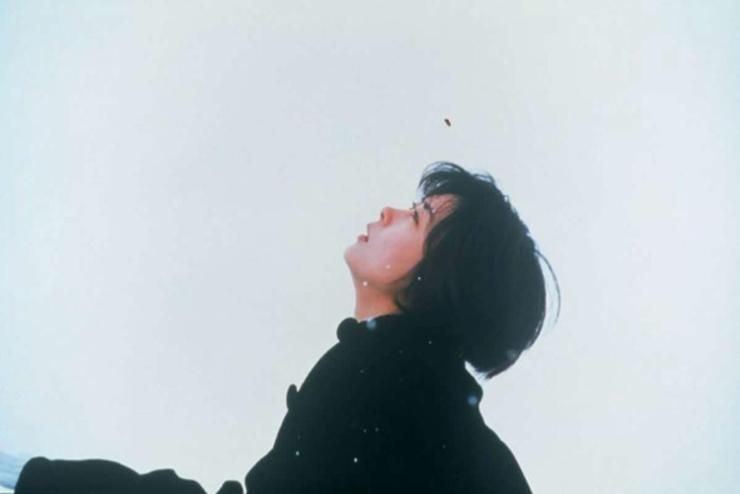
love1.jpg
Miho Nakayama in a scene from the 1995 film 'Love Letter.' (Images courtesy of Waterhole Company)

Is there a Japanese film that resonates with Koreans as much as "Love Letter"? The 1995 romance film was rereleased in Korea on Jan. 1 and has gained considerable popularity again, drawing over 50,000 viewers in nine days.

Industry experts said Friday that the background of its box office revival includes the atmosphere of mourning for lead actor Miho Nakayama, who passed away last month, and the increasing number of fans coming to enjoy what has now become a classic masterpiece.

"This is one of the rare Japanese films, excluding animations that have been a big hit in Korea. This movie is still quoted by many people, and it seems that interest in the film has grown after the unfortunate passing of the lead actor," an industry official in a local film industry said.

Directed by Shunji Iwai, “Love Letter” was the first feature to be released in Korea in 1999, drawing over 1.15 million audiences. The film gained immense popularity for its stunning snowy landscapes of Hokkaido, sweet music and heart-wrenching story.
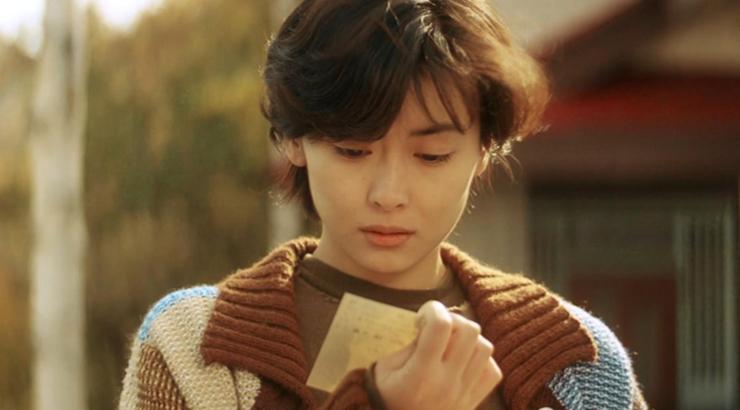
love2.jpg
Miho Nakayama in a scene from the 1995 film 'Love Letter.' (Courtesy of Waterhole Company)

Still recorded as the highest-grossing non-animated Japanese film released here to date, the movie left a deep impression on many Koreans, with the line "Ogenki Desu Ka? Watashi Wa Genki Desu" (How are you doing? I'm doing well) shouted by Nakayama to her deceased lover, still being quoted by many Koreans.

In this movie, the story begins when Nakayama, unable to forget her dead fiance, sends a letter to his old address and receives a reply from his female middle school classmate of the same name (also played by Nakayama).

The re-released film attracted 14,957 viewers on Jan. 1, landing at 11th place in the box office, according to Korea Box Office Information System (KOBIS). Since then, the film has drawn 50,814 viewers over nine days until Thursday, fluctuating between 10th place and just outside the top 10 at the box office.

Watcha, a local streaming service provider, said it imported the film for rerelease in commemoration of the 30th anniversary of its release in Japan.
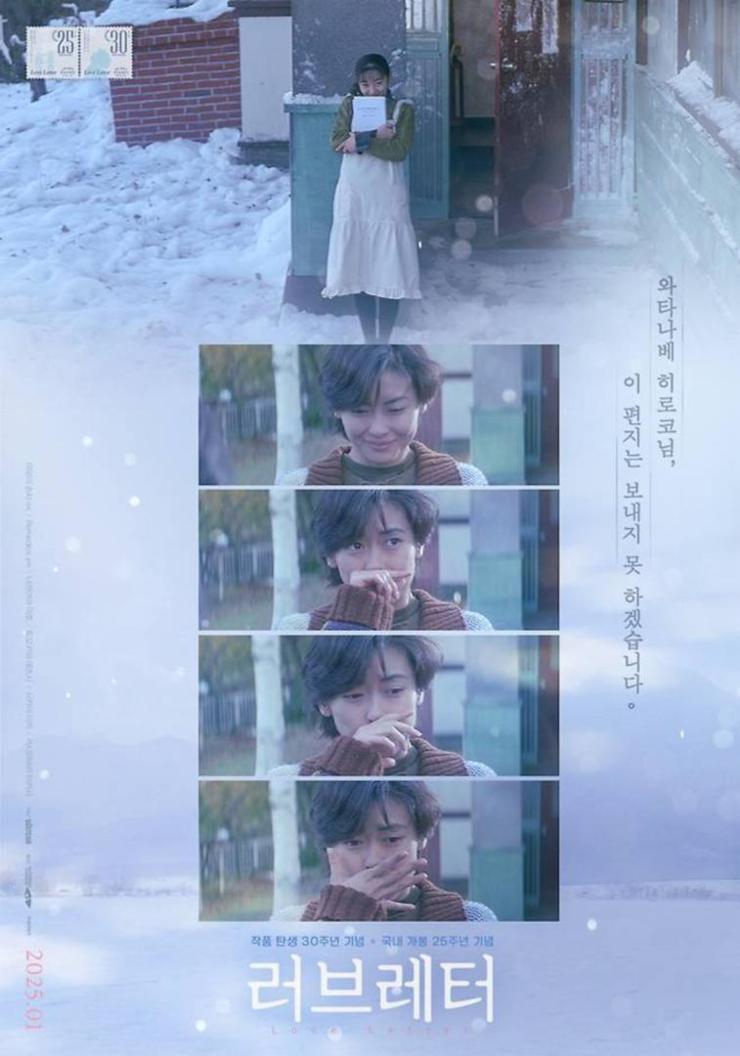
love3.jpg
A poster for the 1995 film 'Love Letter,' which was rereleased in theaters in Korea on Jan. 1.

"On Watcha, a platform consistently loved by movie fans for its rich collection of masterpieces and diverse films, 'Love Letter' is a movie that every film fan has memories of, and has established itself as a steady seller, especially popular in winter," a Watcha official said. "For this rerelease, we introduced vertical subtitles to further emphasize the film's classic sensibility."

Hyun In-chul, a 45-year-old office worker in Seoul, said he decided to watch the movie again after hearing the news of the lead actor’s sudden passing.

"I was sad when I heard the news that she had unfortunately passed away. Her image in the movie from my childhood wouldn't leave my mind. So I'm planning to go see this re-released film," he said. (The Korea Times)

ADVERTISEMENT
.most-popular .layout-ratio{ padding-bottom: 79.13%; } @media (min-width: 768px) and (max-width: 1024px) { .widget-title { font-size: 15px !important; } }

{{ articles_filter_1561_widget.title }}

.most-popular .layout-ratio{ padding-bottom: 79.13%; } @media (min-width: 768px) and (max-width: 1024px) { .widget-title { font-size: 15px !important; } }

{{ articles_filter_1562_widget.title }}

.most-popular .layout-ratio{ padding-bottom: 79.13%; } @media (min-width: 768px) and (max-width: 1024px) { .widget-title { font-size: 15px !important; } }

{{ articles_filter_1563_widget.title }}

{{ articles_filter_1564_widget.title }}

.mb-article-details { position: relative; } .mb-article-details .article-body-preview, .mb-article-details .article-body-summary{ font-size: 17px; line-height: 30px; font-family: "Libre Caslon Text", serif; color: #000; } .mb-article-details .article-body-preview iframe , .mb-article-details .article-body-summary iframe{ width: 100%; margin: auto; } .read-more-background { background: linear-gradient(180deg, color(display-p3 1.000 1.000 1.000 / 0) 13.75%, color(display-p3 1.000 1.000 1.000 / 0.8) 30.79%, color(display-p3 1.000 1.000 1.000) 72.5%); position: absolute; height: 200px; width: 100%; bottom: 0; display: flex; justify-content: center; align-items: center; padding: 0; } .read-more-background a{ color: #000; } .read-more-btn { padding: 17px 45px; font-family: Inter; font-weight: 700; font-size: 18px; line-height: 16px; text-align: center; vertical-align: middle; border: 1px solid black; background-color: white; } .hidden { display: none; }
function initializeAllSwipers() { // Get all hidden inputs with cms_article_id document.querySelectorAll('[id^="cms_article_id_"]').forEach(function (input) { const cmsArticleId = input.value; const articleSelector = '#article-' + cmsArticleId + ' .body_images'; const swiperElement = document.querySelector(articleSelector); if (swiperElement && !swiperElement.classList.contains('swiper-initialized')) { new Swiper(articleSelector, { loop: true, pagination: false, navigation: { nextEl: '#article-' + cmsArticleId + ' .swiper-button-next', prevEl: '#article-' + cmsArticleId + ' .swiper-button-prev', }, }); } }); } setTimeout(initializeAllSwipers, 3000); const intersectionObserver = new IntersectionObserver( (entries) => { entries.forEach((entry) => { if (entry.isIntersecting) { const newUrl = entry.target.getAttribute("data-url"); if (newUrl) { history.pushState(null, null, newUrl); let article = entry.target; // Extract metadata const author = article.querySelector('.author-section').textContent.replace('By', '').trim(); const section = article.querySelector('.section-info ').textContent.replace(' ', ' '); const title = article.querySelector('.article-title h1').textContent; // Parse URL for Chartbeat path format const parsedUrl = new URL(newUrl, window.location.origin); const cleanUrl = parsedUrl.host + parsedUrl.pathname; // Update Chartbeat configuration if (typeof window._sf_async_config !== 'undefined') { window._sf_async_config.path = cleanUrl; window._sf_async_config.sections = section; window._sf_async_config.authors = author; } // Track virtual page view with Chartbeat if (typeof pSUPERFLY !== 'undefined' && typeof pSUPERFLY.virtualPage === 'function') { try { pSUPERFLY.virtualPage({ path: cleanUrl, title: title, sections: section, authors: author }); } catch (error) { console.error('ping error', error); } } // Optional: Update document title if (title && title !== document.title) { document.title = title; } } } }); }, { threshold: 0.1 } ); function showArticleBody(button) { const article = button.closest("article"); const summary = article.querySelector(".article-body-summary"); const body = article.querySelector(".article-body-preview"); const readMoreSection = article.querySelector(".read-more-background"); // Hide summary and read-more section summary.style.display = "none"; readMoreSection.style.display = "none"; // Show the full article body body.classList.remove("hidden"); } document.addEventListener("DOMContentLoaded", () => { let loadCount = 0; // Track how many times articles are loaded const offset = [1, 2, 3, 4, 5, 6, 7, 8, 9, 10]; // Offset values const currentUrl = window.location.pathname.substring(1); let isLoading = false; // Prevent multiple calls if (!currentUrl) { console.log("Current URL is invalid."); return; } const sentinel = document.getElementById("load-more-sentinel"); if (!sentinel) { console.log("Sentinel element not found."); return; } function isSentinelVisible() { const rect = sentinel.getBoundingClientRect(); return ( rect.top < window.innerHeight && rect.bottom >= 0 ); } function onScroll() { if (isLoading) return; if (isSentinelVisible()) { if (loadCount >= offset.length) { console.log("Maximum load attempts reached."); window.removeEventListener("scroll", onScroll); return; } isLoading = true; const currentOffset = offset[loadCount]; window.loadMoreItems().then(() => { let article = document.querySelector('#widget_1690 > div:nth-last-of-type(2) article'); intersectionObserver.observe(article) loadCount++; }).catch(error => { console.error("Error loading more items:", error); }).finally(() => { isLoading = false; }); } } window.addEventListener("scroll", onScroll); });

Sign up by email to receive news.