

ADVERTISEMENT

This Filipino-designed house can mediate heat, withstand typhoons

Featuring the cuboid house by designer Gil Bien

Published Jun 1, 2024 08:27 am

Recently, the Philippine Atmospheric, Geophysical, and Astronomical Services Administration (PAGASA) declared the official start of the rainy season in the Philippines. With this, even well-built homes can experience a range of structural issues. Common problems include roof leaks, overflowing drain pipes, and discoloration. In the worst cases, entire homes can be destroyed. Despite the strong typhoons that frequently hit the country, these concerns are evitable. Case in point: the cuboid house.

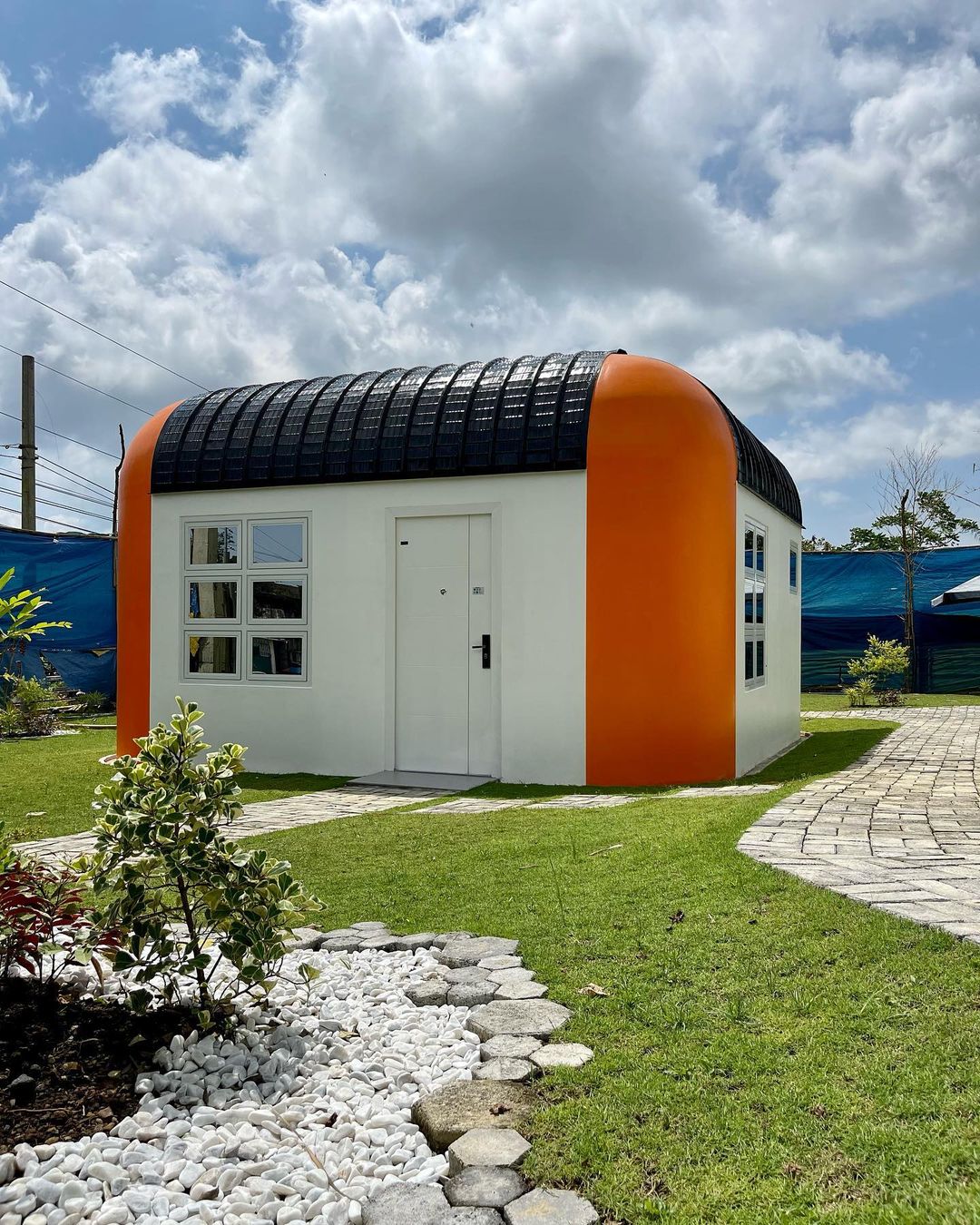
Filipino designer Gil Bien has introduced the cuboid house in the country, designed to withstand typhoons, particularly given that approximately 20 typhoons enter the country's area of responsibility each year.
Snapinsta.app_336338367_1245133662768573_7038843685854765561_n_1080.jpg
Exterior of cuboid house (Photo courtesy: Gil Bien/Instagram)

Before developing his cuboid house design, Bien conducted numerous experiments. He analyzed typhoon wind patterns to determine which areas of a house are most affected during powerful storms.

Following these experiments, Bien envisioned a unique house design with no corners. He created a replica of this design, currently located in Malilipot, Albay, where the roof gutter was removed.

After successful experiments, Bien launched the cuboid house in 2022, aiming to provide Filipinos with a home that could withstand severe winds. He later registered the utility model and industrial design at the Bureau of Patents to exclusively own this design.

"All my experiences and lessons as a designer were tested, but through nearly two years of study, trials, and construction, I have never been happier as a designer," he stated.

The price range for the cuboid house starts at PHP 1.4 million and goes up to PHP 3 million. Bien emphasized that investing in this house is a smart decision, especially for those frequently facing property damage from typhoons.
Snapinsta.app_336251981_726005859005684_8979935501522691229_n_1080.jpg
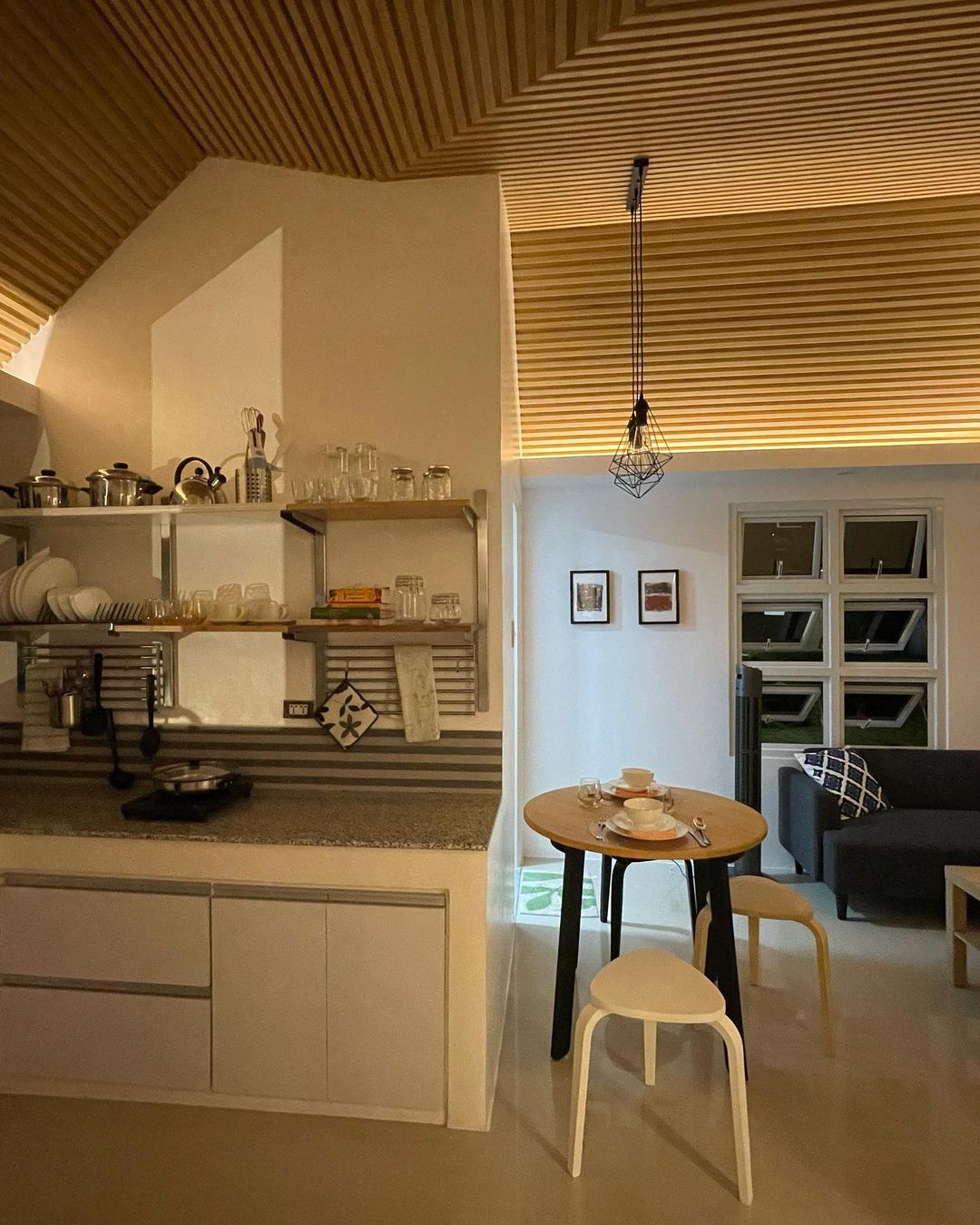
Cuboid house interior (Photo courtesy: Gil Bien/Instagram)

The cuboid houses are not only designed to withstand typhoons but also to mediate heat. "The Cuboid is designed with the tropics in mind. One of the key features is its ability to mediate heat," Bien shared, noting that the interior is six to 10 degrees Celsius cooler than the outside.

With the introduction of cuboid houses, Bien believes that "design will save the world."

Related Tags

MBPropertyLiving Gil Bien Cuboid house
ADVERTISEMENT
.most-popular .layout-ratio{ padding-bottom: 79.13%; } @media (min-width: 768px) and (max-width: 1024px) { .widget-title { font-size: 15px !important; } }

{{ articles_filter_1561_widget.title }}

.most-popular .layout-ratio{ padding-bottom: 79.13%; } @media (min-width: 768px) and (max-width: 1024px) { .widget-title { font-size: 15px !important; } }

{{ articles_filter_1562_widget.title }}

.most-popular .layout-ratio{ padding-bottom: 79.13%; } @media (min-width: 768px) and (max-width: 1024px) { .widget-title { font-size: 15px !important; } }

{{ articles_filter_1563_widget.title }}

{{ articles_filter_1564_widget.title }}

.mb-article-details { position: relative; } .mb-article-details .article-body-preview, .mb-article-details .article-body-summary{ font-size: 17px; line-height: 30px; font-family: "Libre Caslon Text", serif; color: #000; } .mb-article-details .article-body-preview iframe , .mb-article-details .article-body-summary iframe{ width: 100%; margin: auto; } .read-more-background { background: linear-gradient(180deg, color(display-p3 1.000 1.000 1.000 / 0) 13.75%, color(display-p3 1.000 1.000 1.000 / 0.8) 30.79%, color(display-p3 1.000 1.000 1.000) 72.5%); position: absolute; height: 200px; width: 100%; bottom: 0; display: flex; justify-content: center; align-items: center; padding: 0; } .read-more-background a{ color: #000; } .read-more-btn { padding: 17px 45px; font-family: Inter; font-weight: 700; font-size: 18px; line-height: 16px; text-align: center; vertical-align: middle; border: 1px solid black; background-color: white; } .hidden { display: none; }
function initializeAllSwipers() { // Get all hidden inputs with cms_article_id document.querySelectorAll('[id^="cms_article_id_"]').forEach(function (input) { const cmsArticleId = input.value; const articleSelector = '#article-' + cmsArticleId + ' .body_images'; const swiperElement = document.querySelector(articleSelector); if (swiperElement && !swiperElement.classList.contains('swiper-initialized')) { new Swiper(articleSelector, { loop: true, pagination: false, navigation: { nextEl: '#article-' + cmsArticleId + ' .swiper-button-next', prevEl: '#article-' + cmsArticleId + ' .swiper-button-prev', }, }); } }); } setTimeout(initializeAllSwipers, 3000); const intersectionObserver = new IntersectionObserver( (entries) => { entries.forEach((entry) => { if (entry.isIntersecting) { const newUrl = entry.target.getAttribute("data-url"); if (newUrl) { history.pushState(null, null, newUrl); let article = entry.target; // Extract metadata const author = article.querySelector('.author-section').textContent.replace('By', '').trim(); const section = article.querySelector('.section-info ').textContent.replace(' ', ' '); const title = article.querySelector('.article-title h1').textContent; // Parse URL for Chartbeat path format const parsedUrl = new URL(newUrl, window.location.origin); const cleanUrl = parsedUrl.host + parsedUrl.pathname; // Update Chartbeat configuration if (typeof window._sf_async_config !== 'undefined') { window._sf_async_config.path = cleanUrl; window._sf_async_config.sections = section; window._sf_async_config.authors = author; } // Track virtual page view with Chartbeat if (typeof pSUPERFLY !== 'undefined' && typeof pSUPERFLY.virtualPage === 'function') { try { pSUPERFLY.virtualPage({ path: cleanUrl, title: title, sections: section, authors: author }); } catch (error) { console.error('ping error', error); } } // Optional: Update document title if (title && title !== document.title) { document.title = title; } } } }); }, { threshold: 0.1 } ); function showArticleBody(button) { const article = button.closest("article"); const summary = article.querySelector(".article-body-summary"); const body = article.querySelector(".article-body-preview"); const readMoreSection = article.querySelector(".read-more-background"); // Hide summary and read-more section summary.style.display = "none"; readMoreSection.style.display = "none"; // Show the full article body body.classList.remove("hidden"); } document.addEventListener("DOMContentLoaded", () => { let loadCount = 0; // Track how many times articles are loaded const offset = [1, 2, 3, 4, 5, 6, 7, 8, 9, 10]; // Offset values const currentUrl = window.location.pathname.substring(1); let isLoading = false; // Prevent multiple calls if (!currentUrl) { console.log("Current URL is invalid."); return; } const sentinel = document.getElementById("load-more-sentinel"); if (!sentinel) { console.log("Sentinel element not found."); return; } function isSentinelVisible() { const rect = sentinel.getBoundingClientRect(); return ( rect.top < window.innerHeight && rect.bottom >= 0 ); } function onScroll() { if (isLoading) return; if (isSentinelVisible()) { if (loadCount >= offset.length) { console.log("Maximum load attempts reached."); window.removeEventListener("scroll", onScroll); return; } isLoading = true; const currentOffset = offset[loadCount]; window.loadMoreItems().then(() => { let article = document.querySelector('#widget_1690 > div:nth-last-of-type(2) article'); intersectionObserver.observe(article) loadCount++; }).catch(error => { console.error("Error loading more items:", error); }).finally(() => { isLoading = false; }); } } window.addEventListener("scroll", onScroll); });

Sign up by email to receive news.